{{ variable.name }} : {{ variable.values[selectedVariantsIndex[variable_index]].name }}
Quantity:
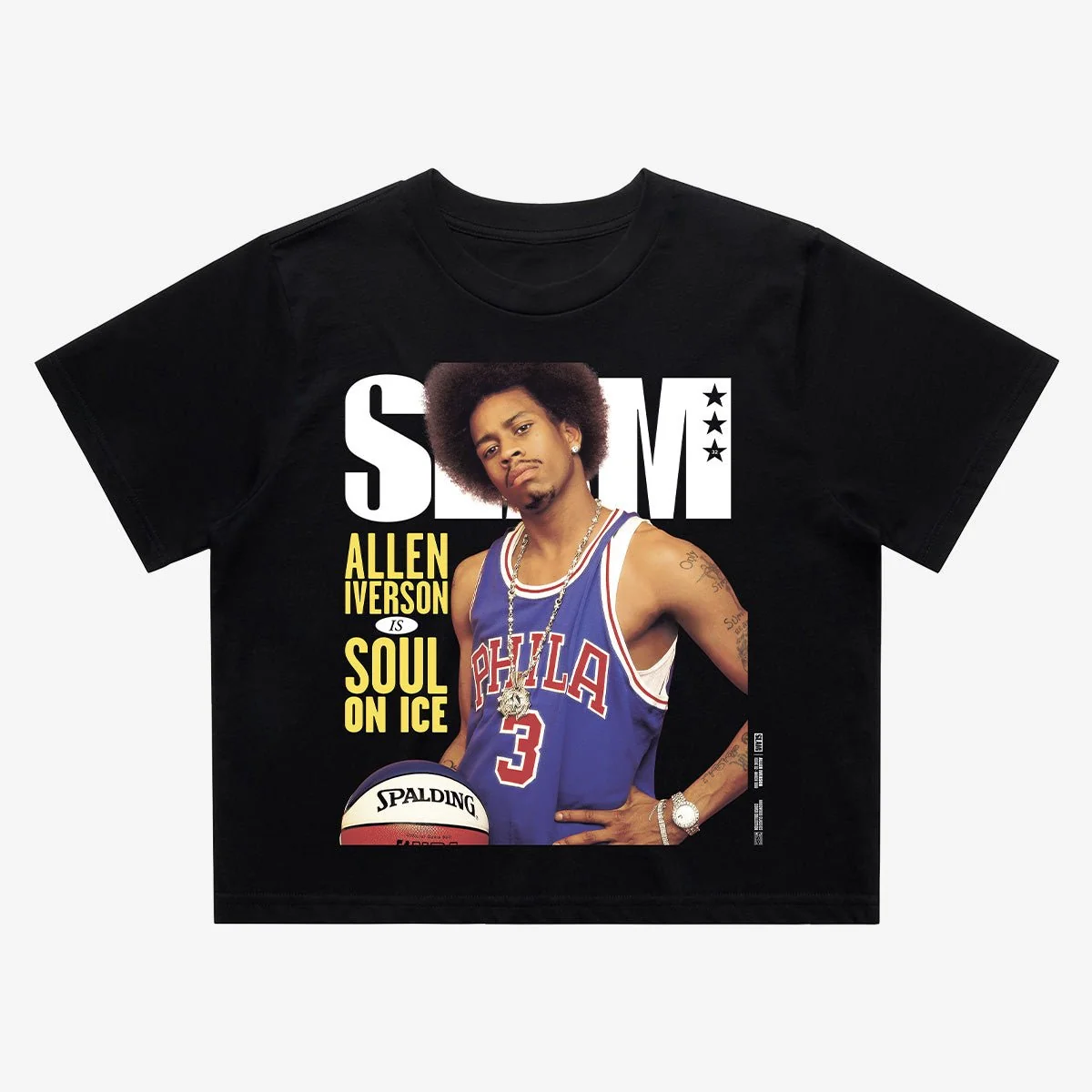
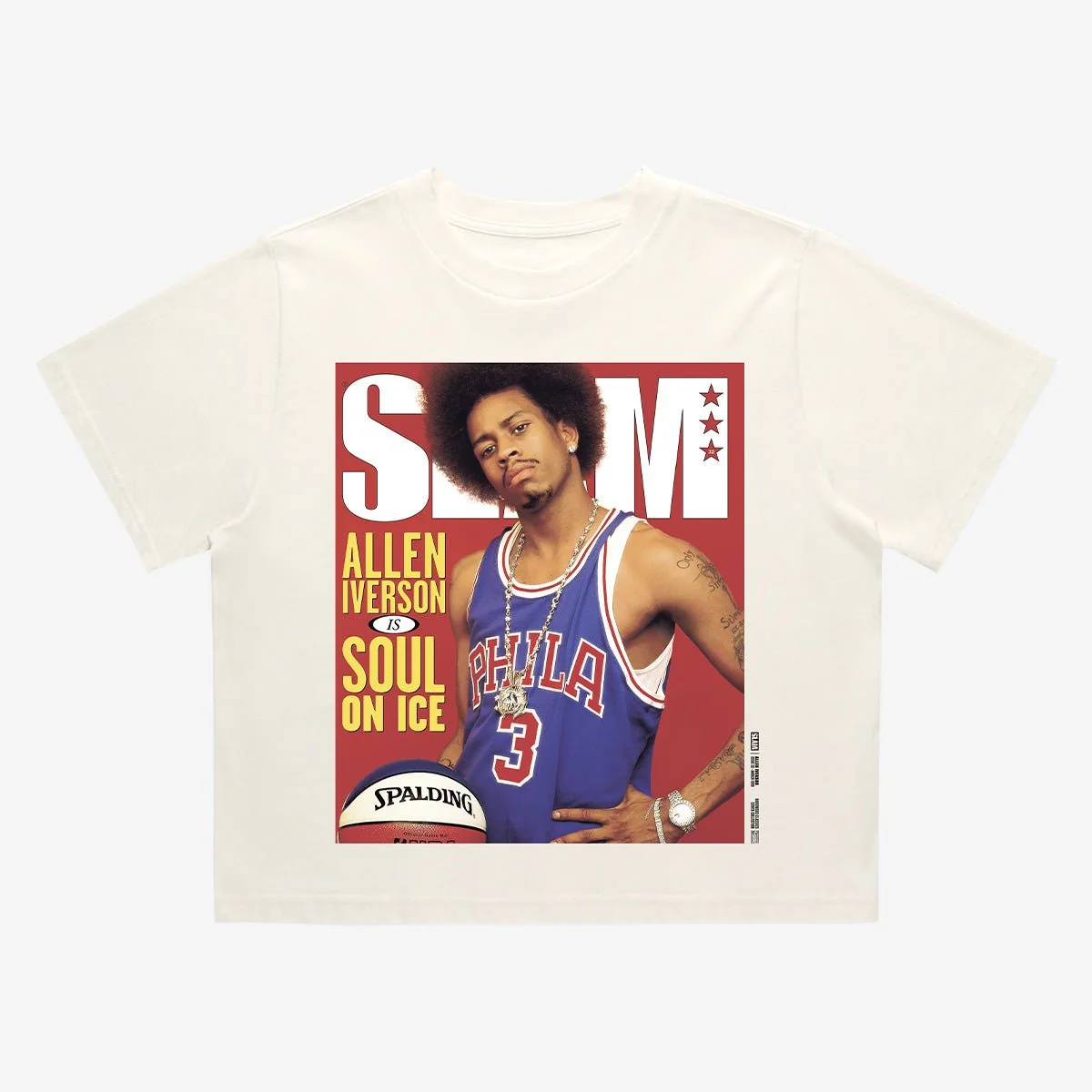
Once SLAM hit issue 1999, the magazine was done with the general population. Playing the game was always for the masses. Issue 32 marked the switch from playing someone else's game to building a new one, and Allen Iverson walked everyone across.
He'd already been on SLAM 9 and SLAM 18. The SLAM 9 cover caught him in an action shot; SLAM 18 played it comparatively tame.
SLAM 32 was a battering ram of an issue that knocked through every locked door to self-expression — doors whose keys had been lost decades earlier. Jewelry, tattoos, an afro, an attitude and something called a "throwback jersey", all of it on the front of a national magazine.
Basketball wasn't in Kansas anymore. The Wizard of Oz got shoved clean out of his little green suit by a 23-year-old with a 'fro skipping along the Yellow Brick Road.
Forget the rules. On that cover Bubba Chuck, as Iverson's friends call him, confirmed what the country keeps burying under conformity: it's cool to be you. He was just being him, decades before anyone would have rightly called Iverson HIM.
"I dress the way I want to dress, I look the way I want to look," Iverson says in the cover story.
Facts. Straight like that.
After that single image, SLAM hit the gas. We sided with Bubba Chuck and wanted everyone on our covers and inside our pages to be true to themselves. #3 is where our voice came from.
The new game was set. Others eventually tried to be like SLAM, and we carried on being different.
Product details


Choose which cookies you'd like to allow. Necessary cookies keep the site working and can't be switched off.